

Kwiakah Regenerative Forestry Pilot
Project Title: Kwiakah Regenerative Forestry Pilot
Recipient: Kwiakah First Nation
Region: Vancouver Island/Coast Region
Theme(s): “Old-like in a new light”, “Thin it to win it”, “Success, failure, learn & tailor”
Awarded Amount: $50,000
Project period: 2025=2026
Description: This Kwiakah-led project will support the Kwiakah vision to heal the forests in our territory which have been heavily impacted by 80+ years of intensive industrial forest plantation management, affecting wildlife, plants, soils and hydrological systems. Kwiakah Forest Keeper/Guardians in collaboration with researchers will test a range of thinning treatments, where larger trees, especially cedar, are protected and the understory, especially food and medicinal plants, are revitalized. This project focuses on post-treatment assessments, where critical information on how to restore carbon sinks, biodiversity, old-growth structure, and resilience will be generated.
Halfway Reporting:
The following is based on halfway reporting by the grantee.
January 26, 2026
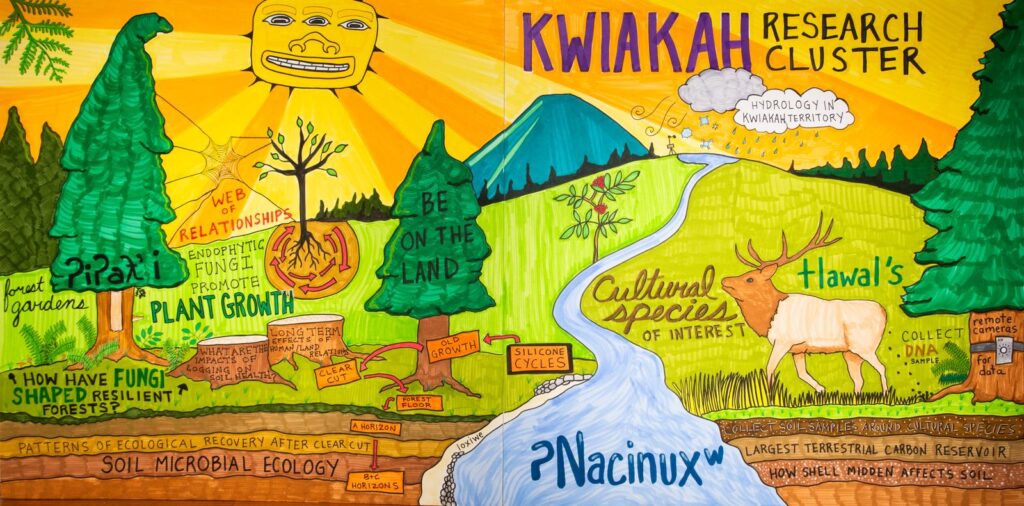
This past June 2025, we gathered on Kwiakah territory with community members, the Nation’s staff, professors, and students for a day on the land. We walked through Wənałdəmsa sa Kwiakah (Phillips Arm and Frederick Arm), shared food and stories, and talked about what it means to restore the relationship between this place and the Kwiakah people.
Over the years, Kwiakah Nation has built conservation partnerships that focus on long term, sustainable care for the forest instead of short term extraction. One of the most damaged areas is the post mining forest at Qaqanəc (Fanny Bay), where the “Little Bear” study plots are located. Decades of mining and industrial activity have left a dense, even aged forest with very little variety in tree sizes, plants, or wildlife habitat, and the land is has been more vulnerable to fire and other stresses.
To help this forest recover, the Nation has begun using variable density thinning. In simple terms, this means carefully removing different numbers of trees in different spots to create a more natural mix of open patches, denser clumps, and leave areas. Most of the thinning was done with conventional hand thinning methods, but in one quarter of the area, two Kwiakah members walked the site and chose themselves which trees should be cut, based on their own knowledge and values. This blend of western forestry methodology and Kwiakah-led decision-making is at the heart of this project.
The SIP grant is helping our team understand which version of this treatment gives the forest the best chance to heal quickly. The funds support monitoring of how the forest is changing above and below ground, including tree growth, stored carbon, soil conditions, and the soil microbial community. We completed all our “before treatment” measurements and sampling in fall 2024 and fall 2025, so we now have a strong baseline of what the Little Bear sites were like before the thinning took place over the winter of 2025/2026.
In the coming year, we will return to the plots to see how the forest is responding. We will measure trees and dead wood, sample soils, look at the seed bank, and track how carbon moves in and out of the system. We are currently planning a follow up community field trip so Kwiakah members can see the thinning results on the ground, ask questions, and share their observations. During our first trip, we collected photos and videos, which we will continue to build into a visual library that the Nation can use for education, outreach, and future planning.
All this work is being organized so that we can compare “before” and “after” conditions in treated and untreated areas in a clear, scientific way, and then translate those findings into an accessible story for the community and the wider public. By the end of the project, we aim to share both a publishable report and easy to understand materials that explain what was tried, what worked best, and how these approaches can guide Kwiakah-led forest restoration in the years to come.
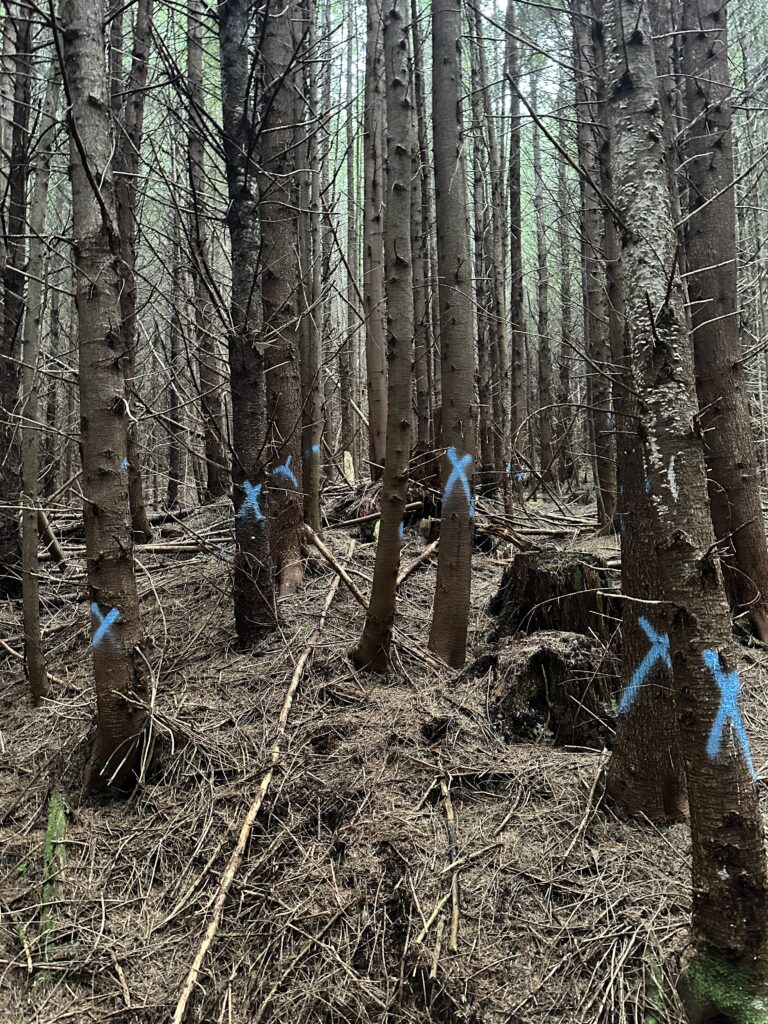
PHOTO: Kwiakah hand-marked trees to be felled. (Credit: Gavin Woodburn)
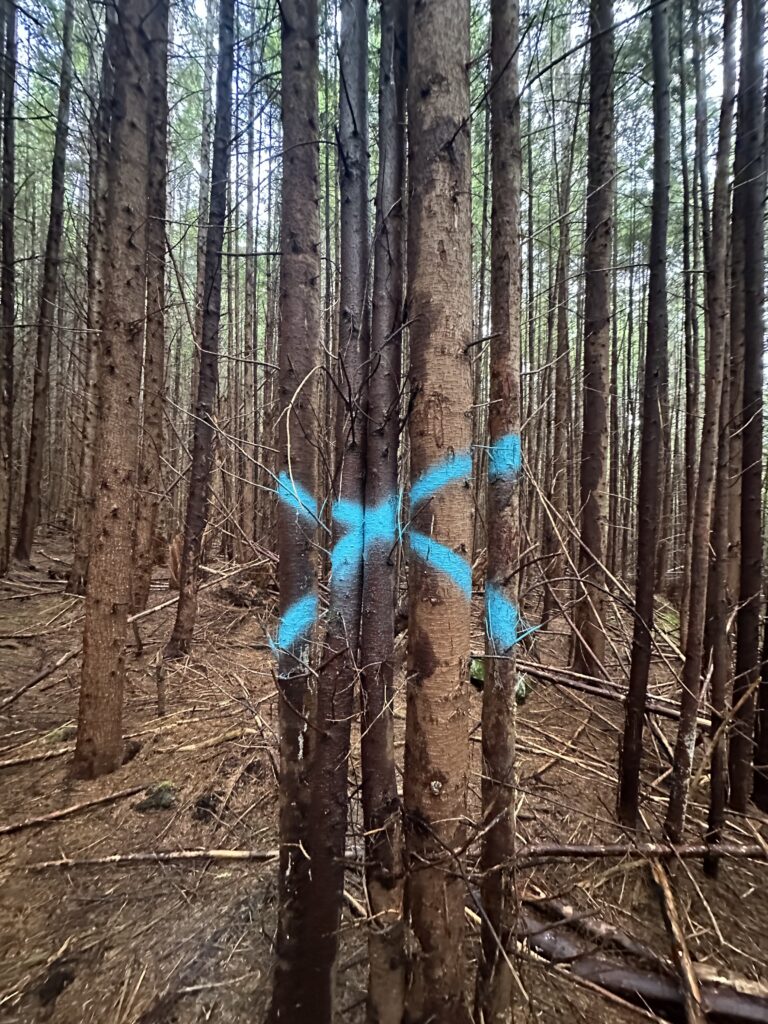
PHOTO: Kwiakah hand-marked trees to be felled. (Credit: Gavin Woodburn)
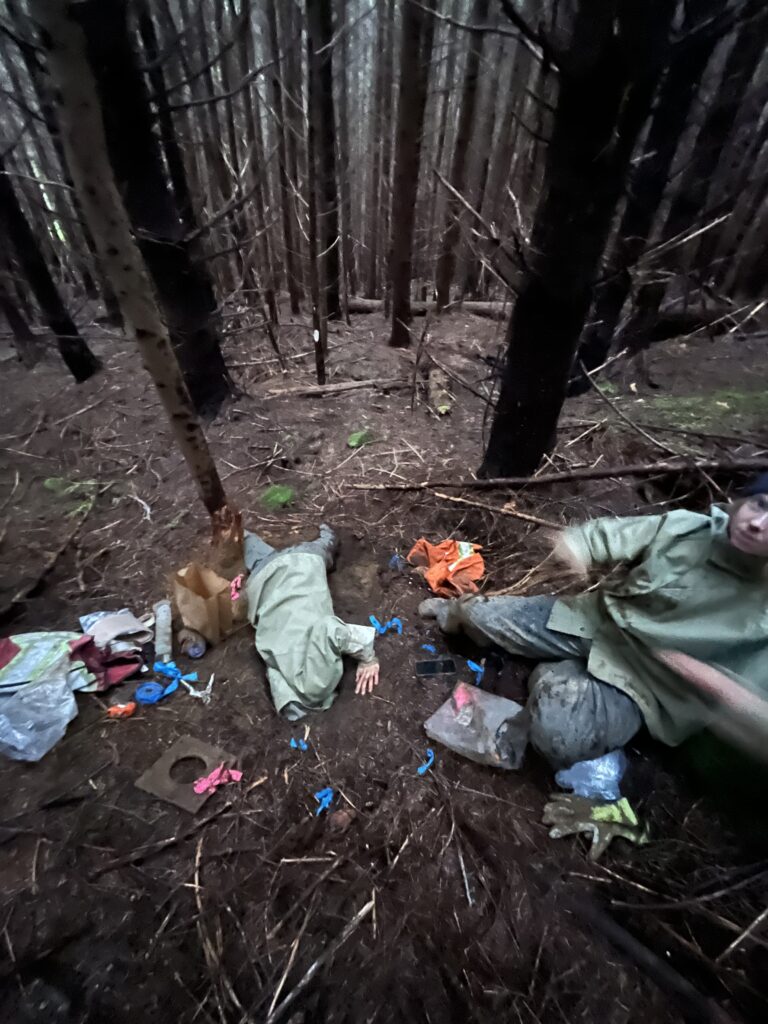
PHOTO: Field crew diving head first (literally!) into taking pre-treatment samples (Credit: Natalia Mondi)
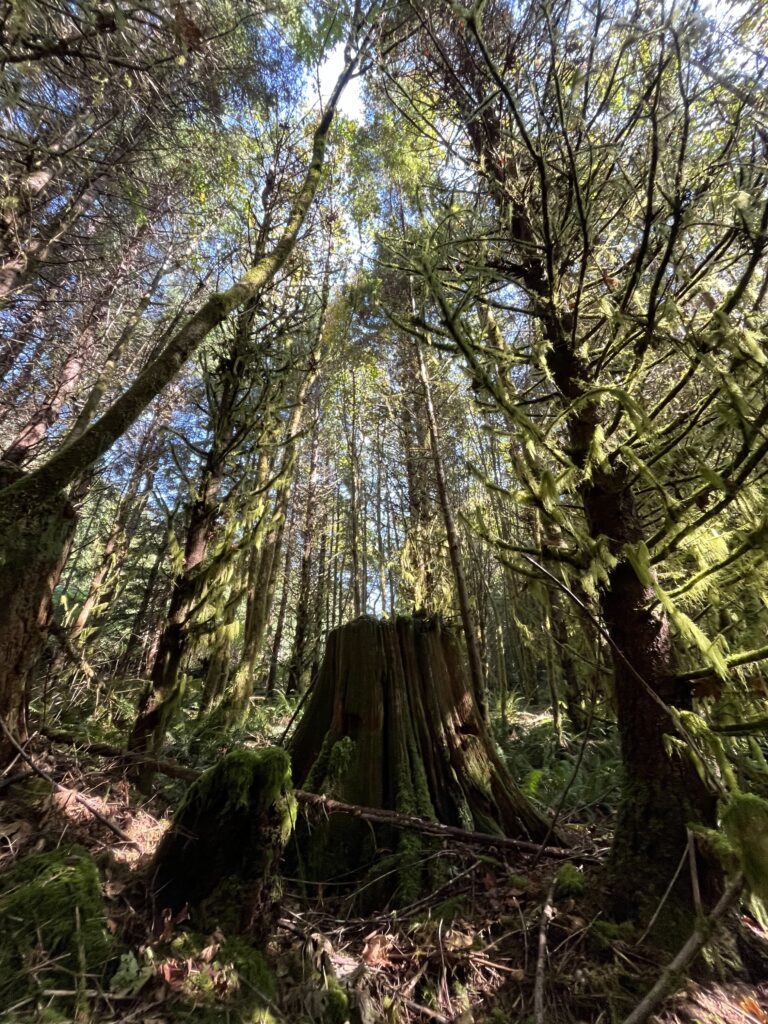
PHOTO: Legacy stump in the stand of Little Bear forest (Credit: Natalia Mondi)
PHOTO: Infographic for the community gathering that was held in June (art credit: Carla Duffey).