

Kwiakah Led Community Gathering and Knowledge Sharing Workshop
Project Title: Kwiakah led community gathering and knowledge sharing workshop
Recipient: Kwiakah First Nation
Region: Vancouver Island/Coast Region
Awarded Amount: $15,000
Project period: 2025-2026
Description: The Capacity Building Grant will support the expansion of Indigenous science knowledge and strengthen relationships with Kwiakah Elders by integrating Indigenous forest management into ongoing research. Funding will enable participation in an Indigenous-led workshop to broaden academic networks and understanding. A community workshop in Campbell River, including ceremony and a feast, will align the Kwiakah Nation’s vision with the project and facilitate knowledge sharing on land management and cultural connections to forests. A site visit to Phillips Arm will help reestablish personal ties to traditional territory, reinforcing the research’s relevance. The grant will also support honoraria, travel, catering, and venue costs to create a welcoming space for community engagement and capacity building.
Final Report:
The following is based on halfway reporting by the grantee.
March 27, 2026
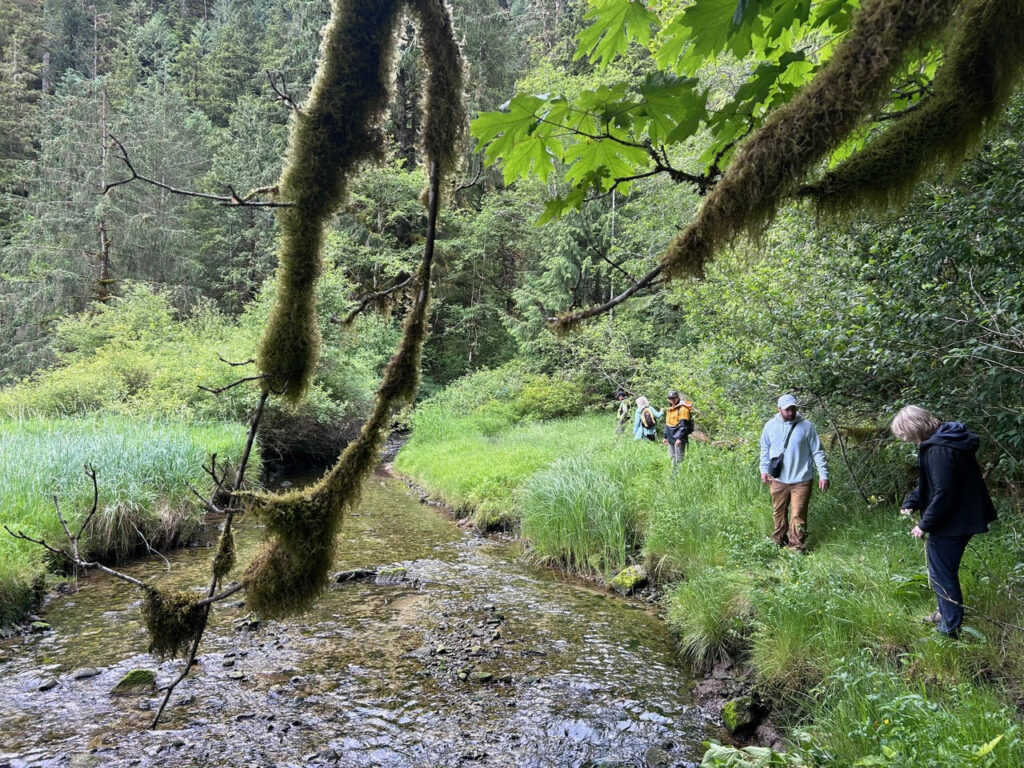
The Kwiakah First Nation led Regenerative Forestry and Knowledge revitalization project brought together Kwiakah Community members and Western scientists that are doing research in Kwiakah’s core territory. This gathering allowed scientists to share details about their approaches to their research that relates to the Kwiakah led regenerative forestry project in their territory. With community members, there was space for discussion that helps everyone learn the many perspectives about the forest and of Kwiakah’s values. The project took place over 2 days. The first day was an in person conference style day with presentations and facilitated discussions. The day was captured through a live graphic recording that could be shared with everyone and offer a more visual representation of our time together. For students who may have never done Indigenous led research, this workshop gave them the opportunity to develop a better relationship with the community and develop a deeper understanding of why this work is so important. For the Kwiakah members, who have been displaced from their traditional territory for multiple generations, this gave them the opportunity to better learn about the state of their land, and build trust and get an understanding of why this work is being done. Together, the facilitated discussions brought out key points such as the importance for students respecting the land using leave no trace methods whenever possible and knowledge sharing through story telling rather than only academic articles. The second day involved a site visit to Kwiakah territory. This involves a 1.5hr boat ride to Phillips Arm from Campbell River. This day was spent visiting various sites related to the research including forest gardens and forest treatment areas. Members and students had the opportunity to walk the lands together. For students, they could demonstrate their methods, point out topics of interest, and further better their relationship and understanding with the community. For members, it was an opportunity to reconnect with their innate knowledge. Despite being displaced from their ancestral lands, simply being back to their territory brings back emotion and deep connection. For some members this can feel like sadness for the displacement that happened, for others it can feel like relief and a sense of belonging. The most important part was that this experience was felt together to help drive the success of healing the lands we call home. Overall, the project was a success bringing together people of different knowledge systems to a shared goal. Healing the land. For the Kwiakah community, this allowed them to learn about the research and work going on within their territory, and for the scientists, this allowed them to learn from the community so that Kwiakah’s governance and values remain central in their work to help second growth forests develop old growth characteristics faster.
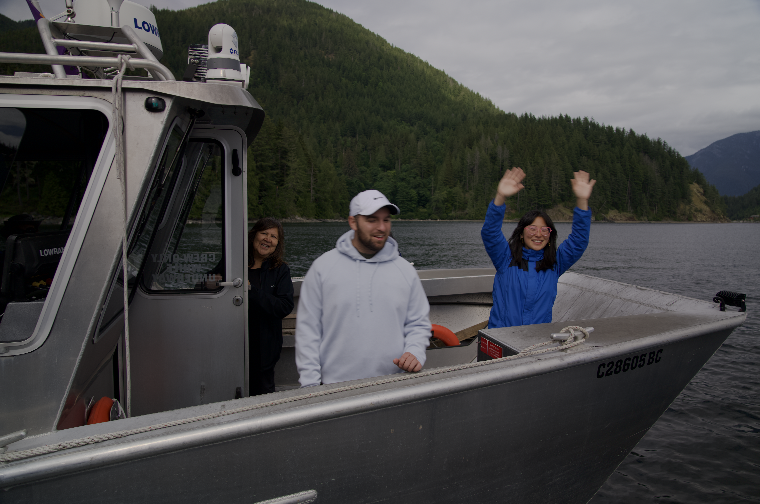
Photo courtesy of Gavin Woodburn.
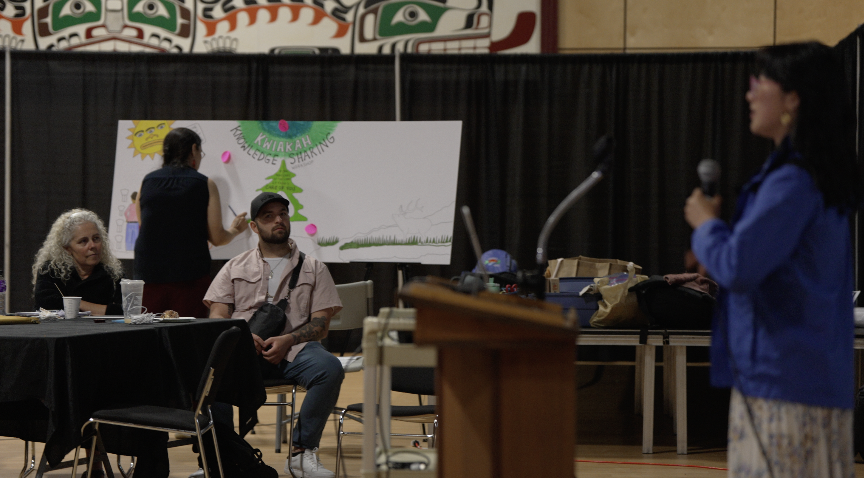
Photo courtesy of Gavin Woodburn.
Halfway Report:
The following is based on halfway reporting by the grantee.
December 5, 2025
As the Kwiakah First Nation begin a major Regenerative forestry project in their core territory, the SIP funds were used to host a community knowledge sharing workshop where community members were able to listen to presentations from University academics doing research, and provide input and thoughts about the future of this large-scale project. The event hosted over 40 people over two days with facilitators, a graphic recorder, videographer, catering, and water taxi costs to bring members from Campbell River, to Phillips Arm (Kwiakah’s core territory). The final steps are to compile the comments from members into a document for students to refer to later down the road in their research. The event was a great way for both community and academics to learn and understand the significance of the work and ensure it remains a Kwiakah led project. As Kwiakah’s core territory is only accessible via boat, membership is unable to connect with their land, so to bring them out there brought heavy emotions mixed with optimism and excitement for the restoration of the scarred landscapes that are still spiritually considered home to the Kwiakah.
Photo: Walking to Forest Garden in Kwiakah Territory. Credit: Gavin Woodburn.
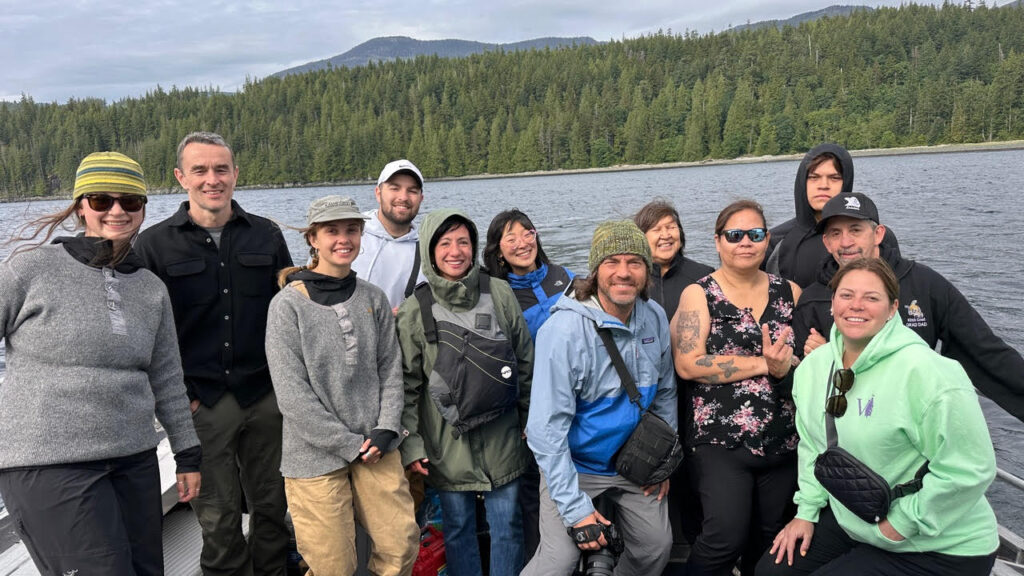
Photo: Community Members and Academics on boat to Kwiakah Territory. Credit: Gavin Woodburn.