Growing Futures: Skwlax Guardians Silviculture Training
Project Title: Growing Futures: Skwlax Guardians Silviculture Training
Recipient: Skwlāx te Secwepemcúle̓cw
Region: Thompson-Okanagan Region
Theme(s): “Training Tomorrow’s Forest Innovators”
Awarded Amount: $46,851
Project period: 2025
Description: The “Growing Our Future” program intends to support the forest rehabilitation of Skwlāx te Secwepemcúle̓ cw First Nation after facing devastating wildfires in the summer of 2023. This program will be a six-week training program on silviculture practices for the Skwlāx community members and Guardians. The training program will focus on collaboration between Indigenous and silviculture practices. Participants will gain practical experience, industry certification, and increased employment opportunities in forestry while supporting environmental stewardship.
PROJECT REPORT:
The following is based on the final report from the Grantee.
Project Overview
Skwlāx te Secwepemcúl̓ecw (Little Shuswap Lake Band) Territorial Resource Stewardship department received $46,851.84 in grant approval from the Bulkley Valley Centre for Natural Resources Research and Management – Silviculture Innovation Program. Grant was used to deliver Growing Our Future – Guardians Silviculture Training project, as part of the Skwlax’ wider community-based post-wildfire forest training and rehabilitation initiative. The program was developed in response to the devastating wildfires that impacted community and 45,613 hectares of Skwlāx te Secwepemcúl̓ecw traditional lands during the summer of 2023, causing extensive damage to forests, ecosystems, and culturally significant areas.
Project “Growing Our Future” was designed as a five-week silviculture training program (delivered in 3 separate training courses and one community engagement session) focused on building long-term capacity within the community for restoring the lands affected by 2023 Bush Creek Fire. The program emphasized the need for integration of Secwépemc knowledge and values with modern silviculture practices to support ecosystem restoration, sustainable land stewardship and Skwlax participation in economic opportunities.
Project Objectives
The objectives of the “Growing Our Future” program were to:
- Support post-wildfire forest rehabilitation efforts on Skwlāx te Secwepemcúl̓ecw traditional lands;
- Build silviculture skills and knowledge among Guardians and community members;
- Integrate Indigenous land stewardship principles with western forestry practices;
- Provide practical training, industry certifications, and employment pathways for the band members; and
- Strengthen Skwlax’ environmental stewardship and long-term forest management capacity.
Program Description
The Growing Our Future program was delivered over a five-week period and included classroom learning and field-based silviculture survey training to enable Skwlax Guardian members participation in silviculture industry. It also created a path for collaboration between Indigenous knowledge holders and forestry professionals to ensure culturally grounded and technically sound approaches to reforestation and forest rehabilitation.
Training components included:
- Introductory and Comprehensive Silviculture Survey Training to support post-wildfire site assessments and rehabilitation planning;
- Understanding of the current legal requirements for silviculture surveys, biogioclimatic ecosystem classification (BEC), stratification, data collection and reporting;
- Identifying regional forest health agents, importance of forest health monitoring and understand the potential impacts of forest health factors;
- Familiarity with the Tree planting and forest regeneration techniques
- Seedling handling, storage, and planting standards
- Safety training and industry best practices
Elders, knowledge keepers, and experienced silviculture practitioners played an important role in the program, ensuring Secwépemc perspectives, language, and values were reflected throughout the training and during community engagement session.
Participants
Program engaged Skwlāx te Secwepemcúl̓ecw community members and Guardians who expressed interest in forestry, land stewardship, and environmental restoration. The participants ranged from individuals and guardians that are new to the forestry sector to guardians who are seeking to strengthen the existing skills.
Through participation in the program, Guardians gained:
- Hands-on experience in silviculture, silviculture surveys and forest rehabilitation;
- Exposure to forestry and land management career pathways;
- Industry-recognized certifications including accredited silviculture surveyor designation;
- Increased confidence and readiness for employment in silviculture operations and forestry-related roles.
Outcomes and Achievements
The Growing Our Future program successfully met its objectives and delivered meaningful outcomes for Skwlāx te Secwepemcúl̓ecw, including:
- Increased community capacity to support post-wildfire forest assessments and rehabilitation;
- Strengthened collaboration between Indigenous knowledge systems and silviculture practices;
- Participants equipped with practical skills and certifications applicable to forestry employment;
- Enhanced role of Guardians in monitoring, restoration, and stewardship activities
- Greater community awareness of forest health, wildfire impacts, and climate resilience
In 2025 Skwlax signed the FIP Program Recipient Agreement with the Province to conduct post-wildfire planting eligibility surveys. In the first year of the program guardians participated in surveying 1,400 hectares of land within the Bush Creek fire and carried out Skwlax 2025 Spring Plant quality control of 25,000 trees planted on the Quaaout and Scotch Creek IRs.
SIP grant Innovation in Action program also positively contributed to community healing and reconnection to the land following the trauma of the 2023 wildfire.
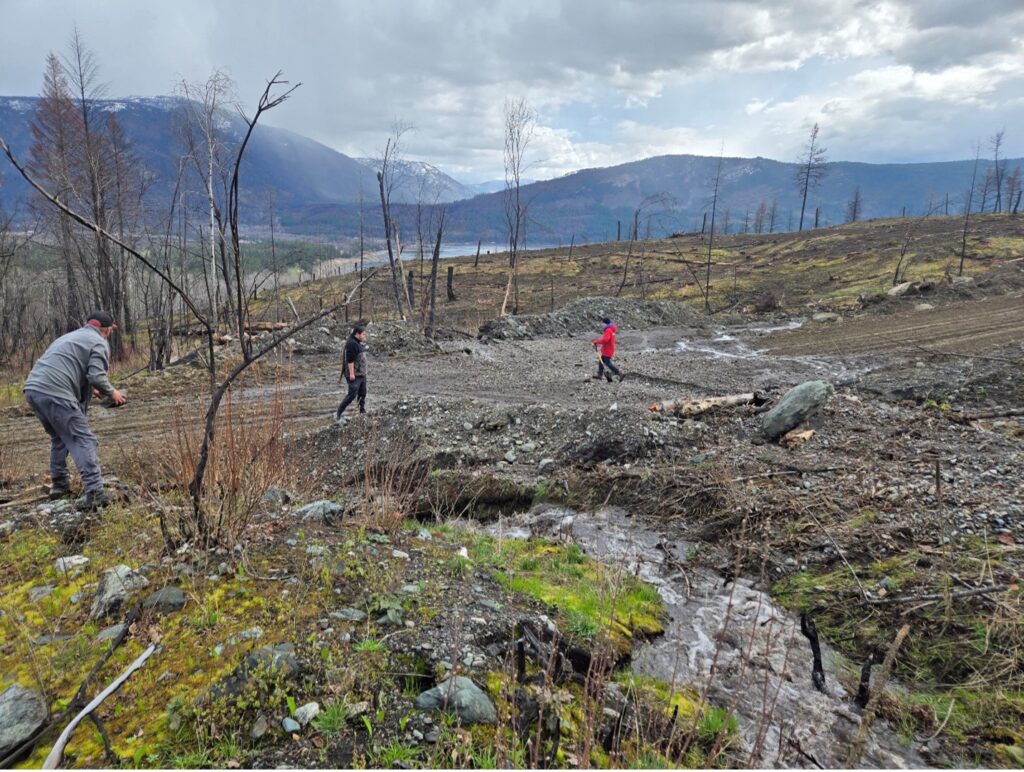
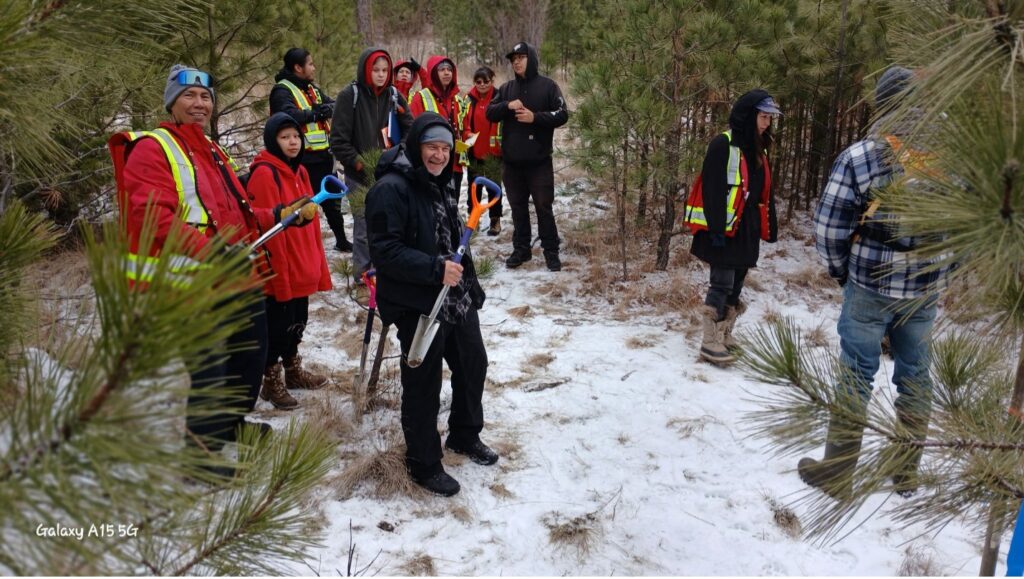
PHOTO: Silviculture Surveys Training in a post-wildfire landscape (Credit: Skwlāx te Secwepemcúle̓cw).
Use of Funds
The Silviculture Innovation Program grant was used to support:
- Program coordination and administration
- Training fees, Elder, and knowledge holder honoraria
- Training materials, tools, and equipment
- Personal protective equipment and safety supplies
- Certification and course-related costs
- Transportation and logistics for field-based training
All funds were used directly to support the successful delivery of the program and participants outcomes.
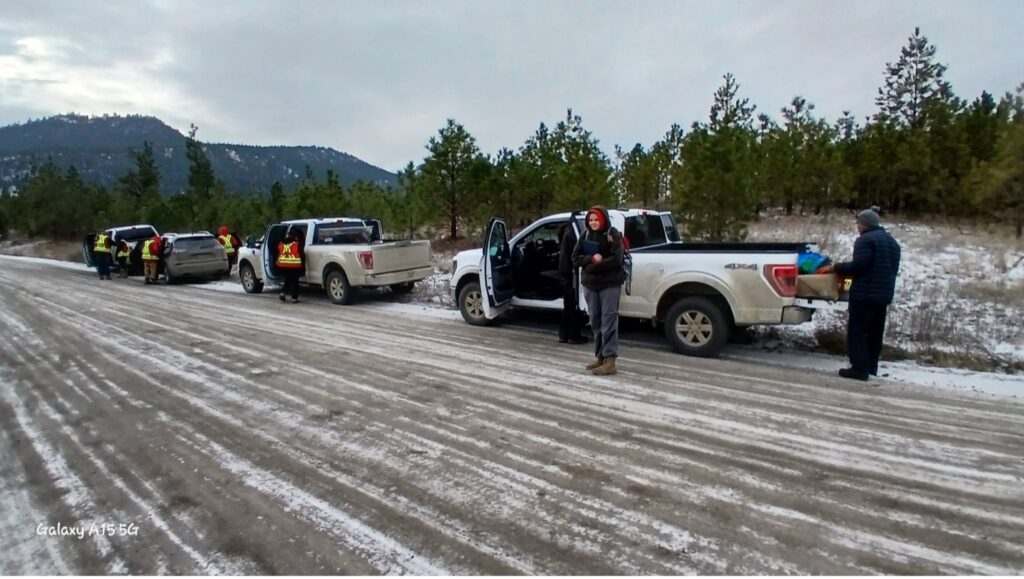
PHOTOS: Field Day – Comprehensive Silviculture Surveys Training (Credit: Skwlāx te Secwepemcúle̓cw).
Challenges and Lessons Learned
Some challenges were encountered, including time constraints, competing priorities and dealing with limited resources. These challenges were addressed through flexible scheduling and strong collaboration among delivering partners.
Key lessons learned include:
- Community-led, hands-on training is highly effective;
- Integrating Secwépemc knowledge of the land strengthens forest rehabilitation outcomes;
- Investing in local skills and capacity creates long-term environmental and economic benefits.
Future Directions
The success of Growing Our Future demonstrates Skwlax strong interest and need for continued silviculture and land stewardship training including a meaningful employment opportunities within Skwlāx te Secwepemcúl̓ecw. Future opportunities include:
- Expanding forest restoration and silviculture training programs
- Supporting long-term rehabilitation and monitoring projects
- Creating seasonal and permanent employment opportunities for trained participants
- Strengthening partnerships with forestry organizations, industry, and government.
Conclusion
Growing Our Future represents an important step toward recovery, resilience, and sustainable land stewardship for Skwlāx te Secwepemcúl̓ecw following the 2023 wildfires. Through the support received from the SIP Silviculture Innovation Program, the community has strengthened its ability to care for the land, empower its people, and build a forestry future grounded in Secwépemc knowledge and modern silviculture practices.
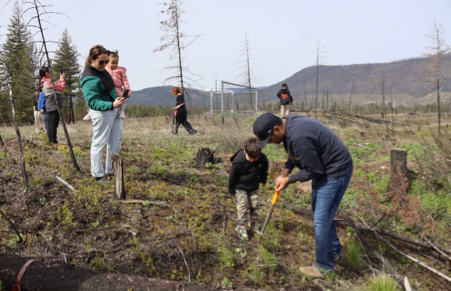
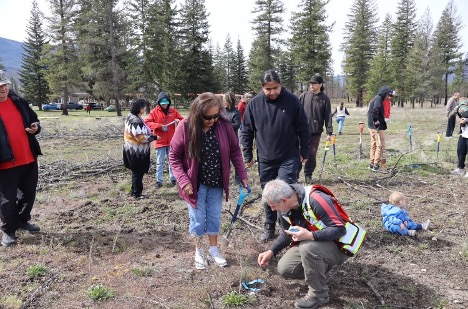
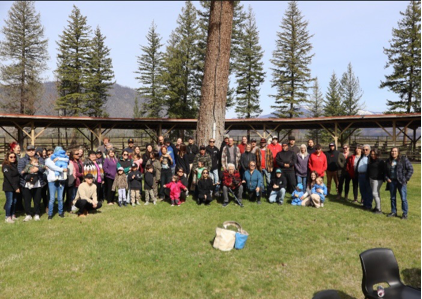
PHOTOS: The SteS Arbour and the new Dancing Fawn Subdivision were the scenes for a tree planting ceremony on Monday, April 14th. Band members and the SteS Head start program planted 300 trees. Photos courtesy of Sunshine and Dustin Tomma.