

Fire Effects on Traditional Food Plants
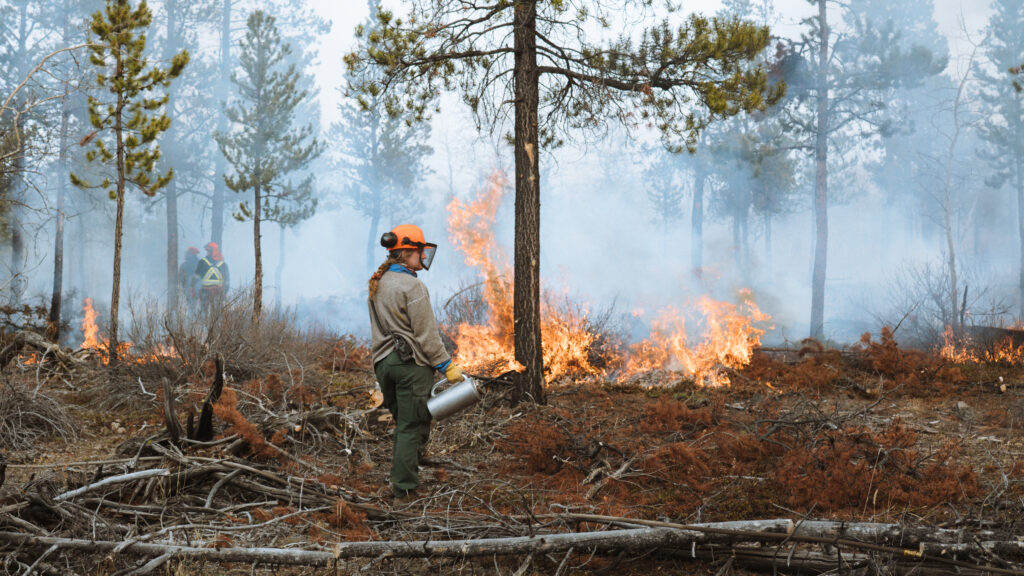
Project Title: Fire Effects on Traditional Food Plants
Recipient: Thompson Rivers University
Region: Cariboo
Theme(s): “A burn a day can help keep wildfire away”
Awarded Amount: $50,000
Project Period: 2025-2027
Description: This project aims to understand how fire management impacts the health and nutritional quality of culturally significant plants for the Xeni Gwet’in First Nations. We will assess ecological restoration and support traditional food sources through community-led traditional fire practices, fuel treatment thinning, and monitoring. Activities include controlled burning, fuel reduction, and community engagement through interviews and workshops, which include traditional knowledge paralleling scientific practices to enhance eco-cultural resilience and sustainable land management.
Halfway Report:
The following is based on halfway reporting by the grantee.
December 15, 2025
Bringing Fire Back in a Good Way: Community-Led Fire Stewardship in Xeni Gwet’in Territory
Fire has long played an important role in how the Xeni Gwet’in care for their land. It supported healthy forests, productive berry patches, and strong connections between people and place. Over time, these practices were disrupted, and fire was largely removed from the landscape. This project is about carefully reintroducing fire in a way that is safe, culturally grounded, and responsive to today’s conditions.
With support from the SIP program, this project brings together prescribed fire with cultural objectives and community-based research to better understand how fire season, fire severity, and site preparation influence both wildfire risk and culturally important plants. SIP funding supports community engagement, on-the-ground data collection, extension products, and analysis that inform future fire stewardship decisions.
Work began with relationship-building and shared learning. A Fire Stewardship Dinner and Trivia night created space for open conversation about fire in a welcoming setting. This was followed by a Cultural Burn Workshop in Esk’et, where community members, practitioners, and partners explored how cultural and prescribed fire can work together to meet local stewardship goals.
In early spring, pre-burn fuel measurements were completed at the Rodeo Grounds to establish baseline conditions. In April 2025, the project reached an important milestone with a successful spring burn. The burn was carefully planned and carried out with strong participation from Xeni Gwet’in Tin Towh (forestry) crew, community members, and partner organizations including Alkali Resource Management, Nothern Fire WoRx, and the BC Wildfire Service. This provided valuable hands-on learning and helped build local confidence with fire.
Throughout the summer, post-burn plant and fuel measurements were completed, focusing on culturally significant species such as soapberry and kinnikinnick. Additional data were collected at unburned control sites to support meaningful comparisons.
The project is now moving into its analysis phase. Plant samples are being assessed to understand how fire affects nutrient content, regrowth, and berry potential, while fuel data are being reviewed to evaluate treatment effectiveness. Next steps include sharing results back with the community through post-fire walkthroughs and an extension video, and planning future burns when conditions allow.
A key lesson so far is that rebuilding fire stewardship is a gradual process. Remoteness, heavy fuel loads, and complex regulatory pathways create challenges, but each successful burn builds experience, strengthens partnerships, and increases community confidence. With SIP support, this project is laying the groundwork for long-term, Indigenous-led fire stewardship in Xeni Gwet’in territory.
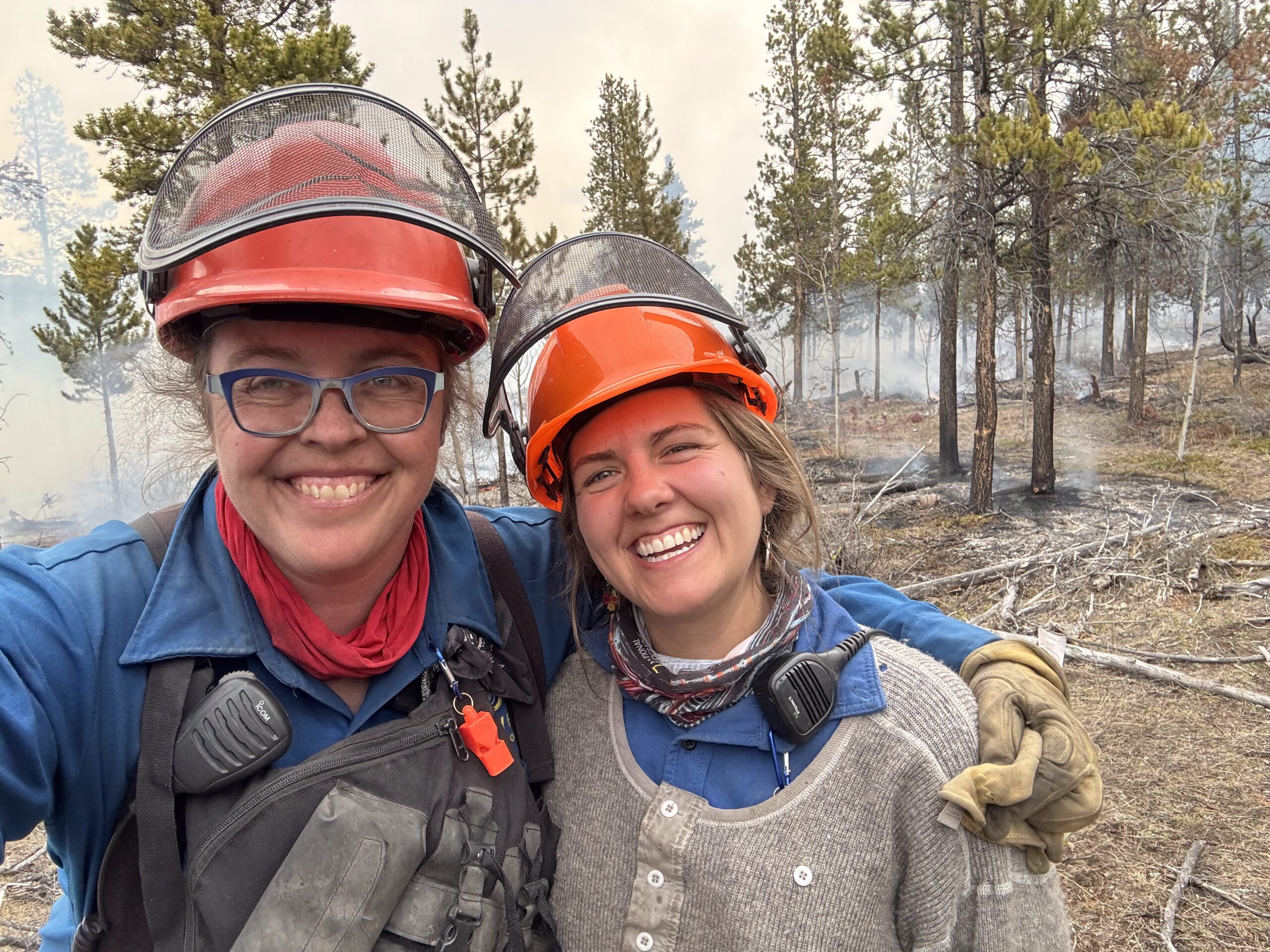
Photo: Burn bosses. Credit: Sonja Leverkus.
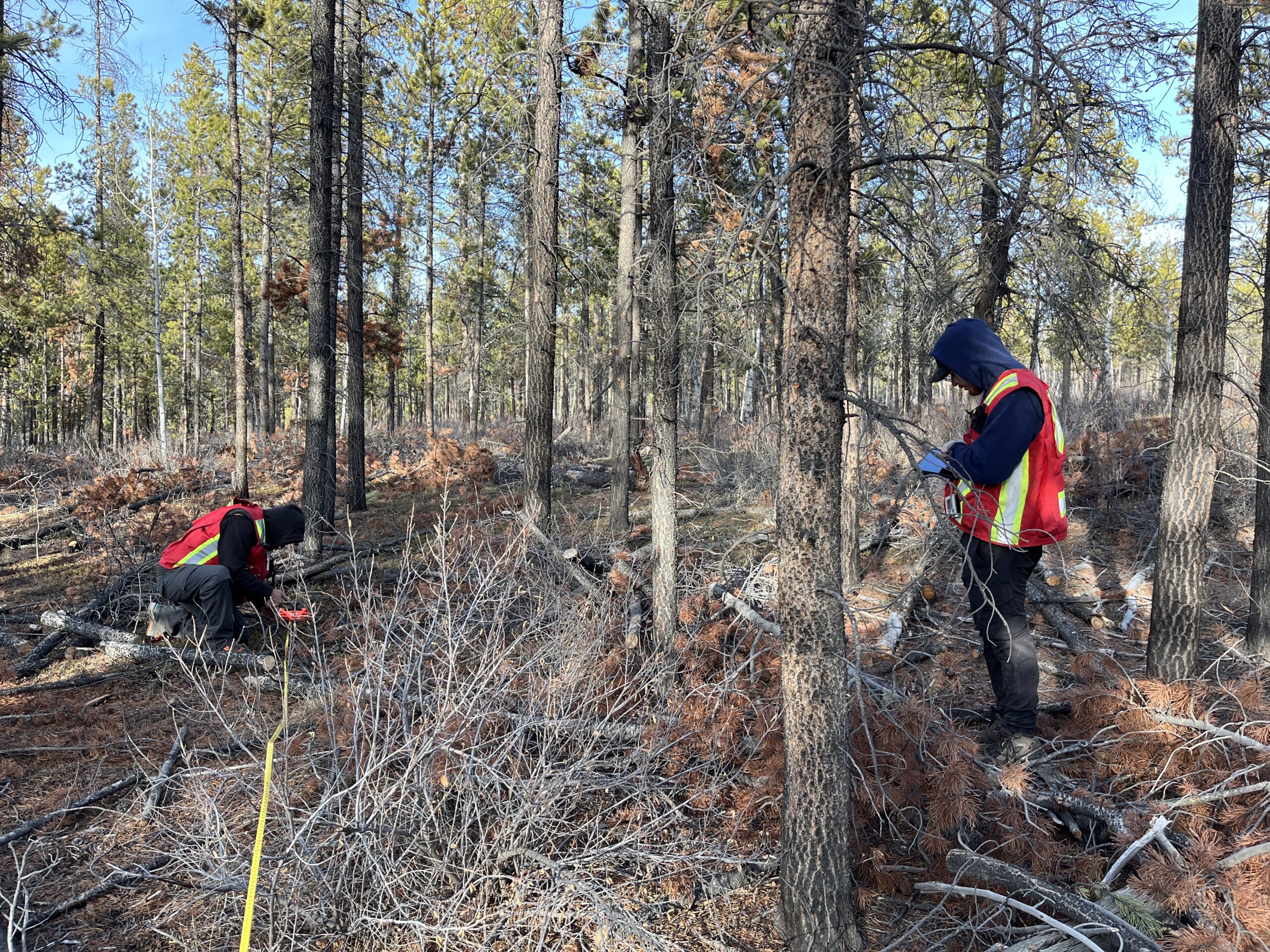
Photo: Pre-burn fuel sampling (UBC Method). Credit: Alexis Stowards.
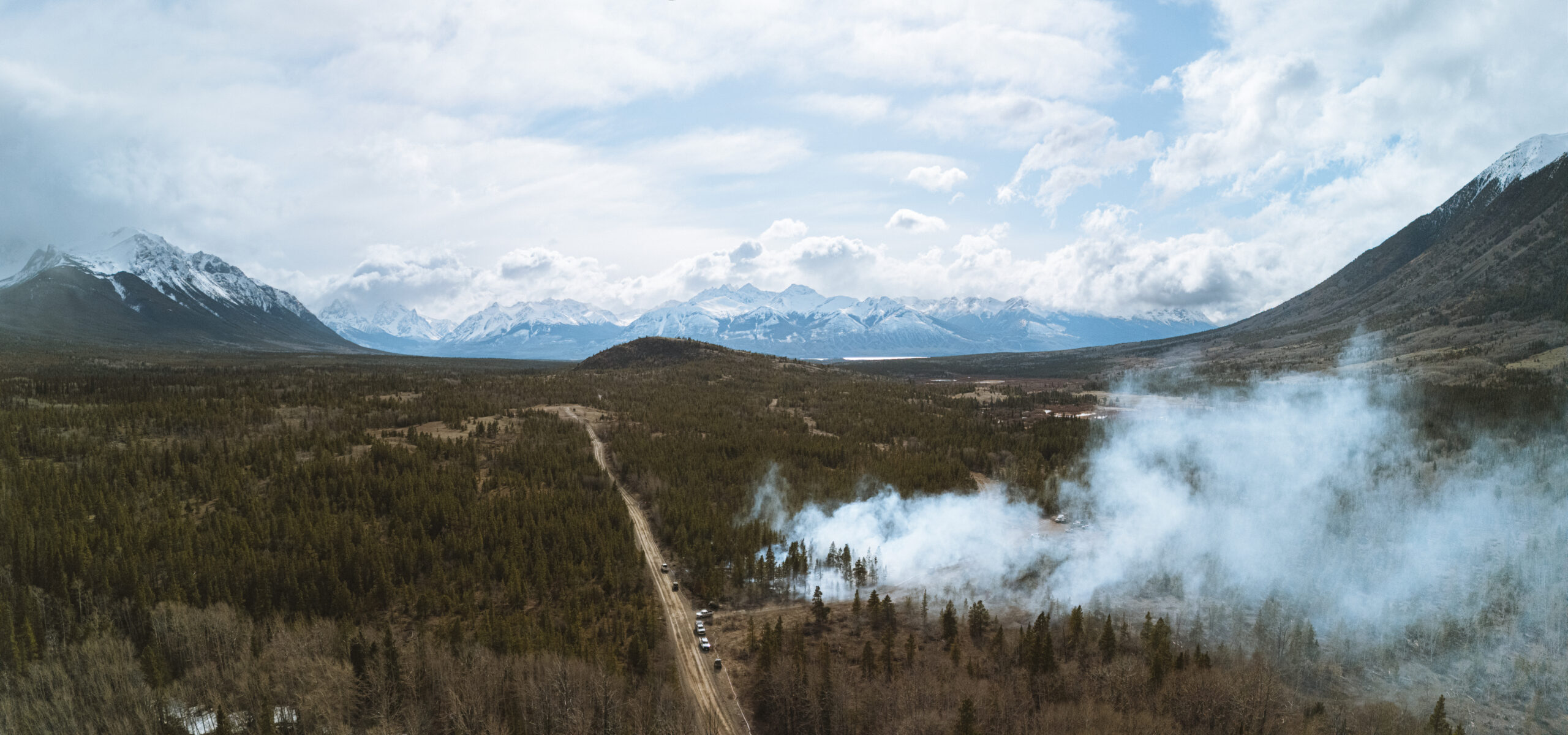
Photo: Burn area overview. Credit: Nolan Guichon.
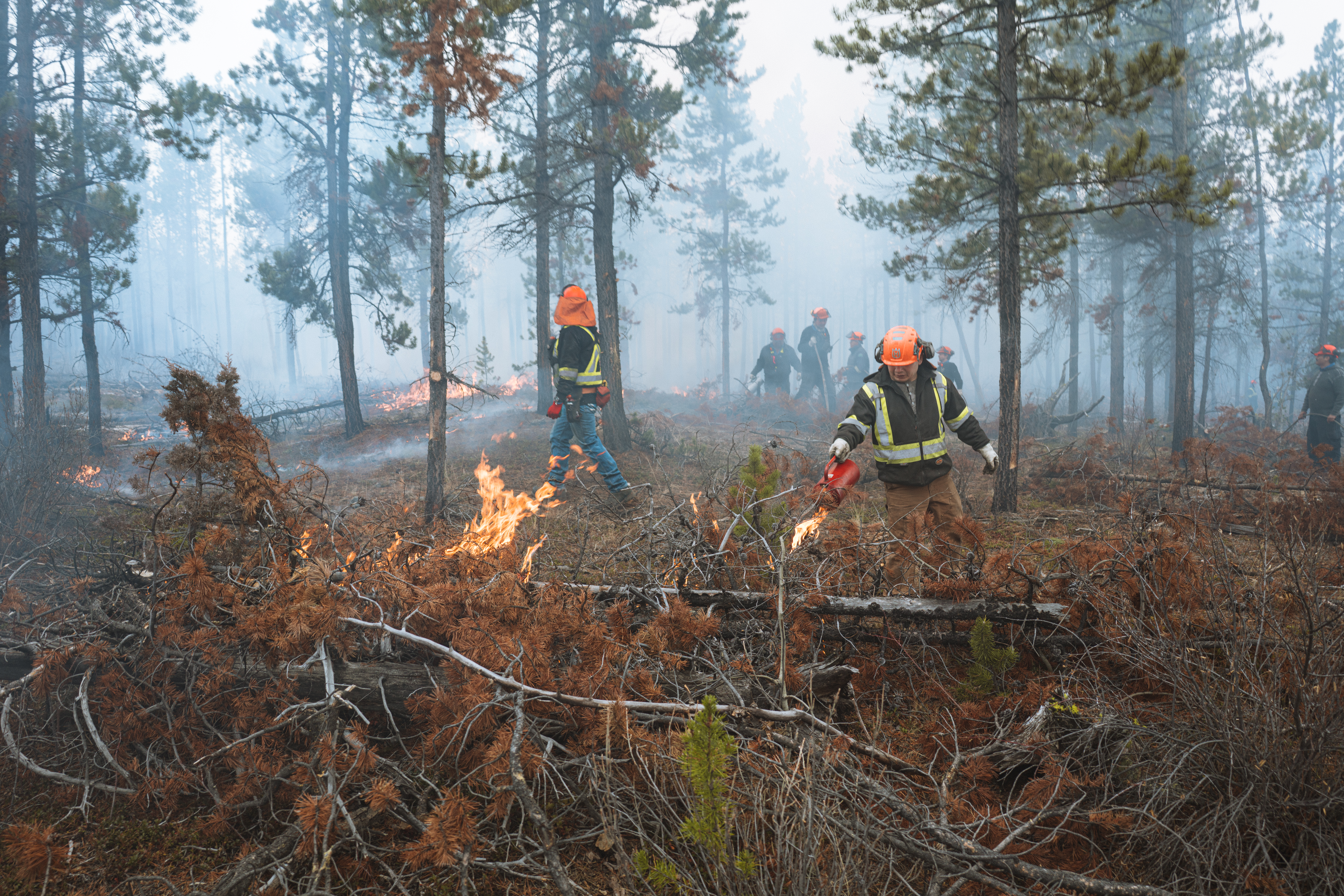
Photo: Tin Towh Crew burning. Credit: Nolan Guichon.
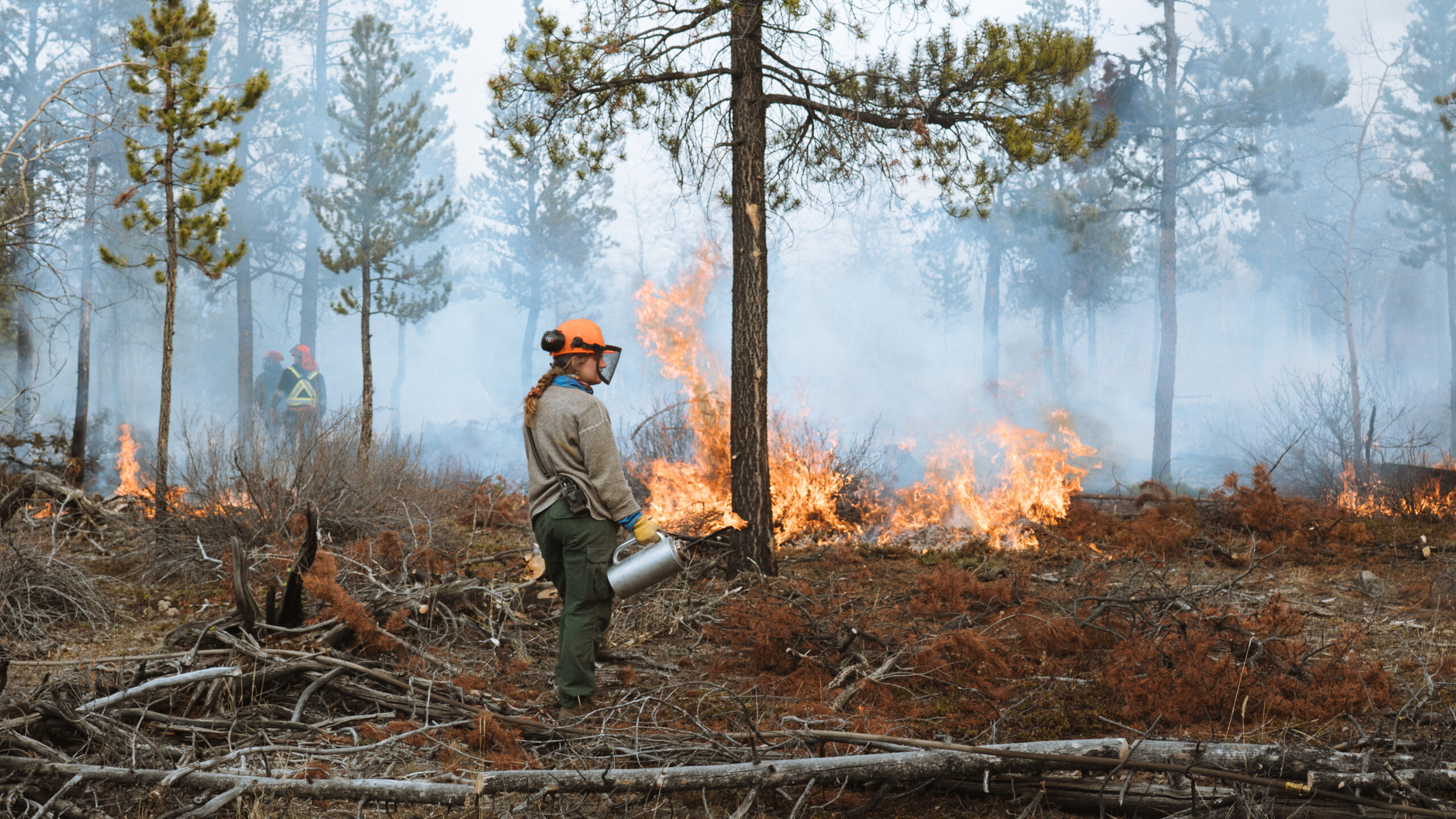
Photo: Principal researcher burning her plots. Credit: Nolan Guichon.
Photo: Site overview at the plot level. Credit: Nolan Guichon.
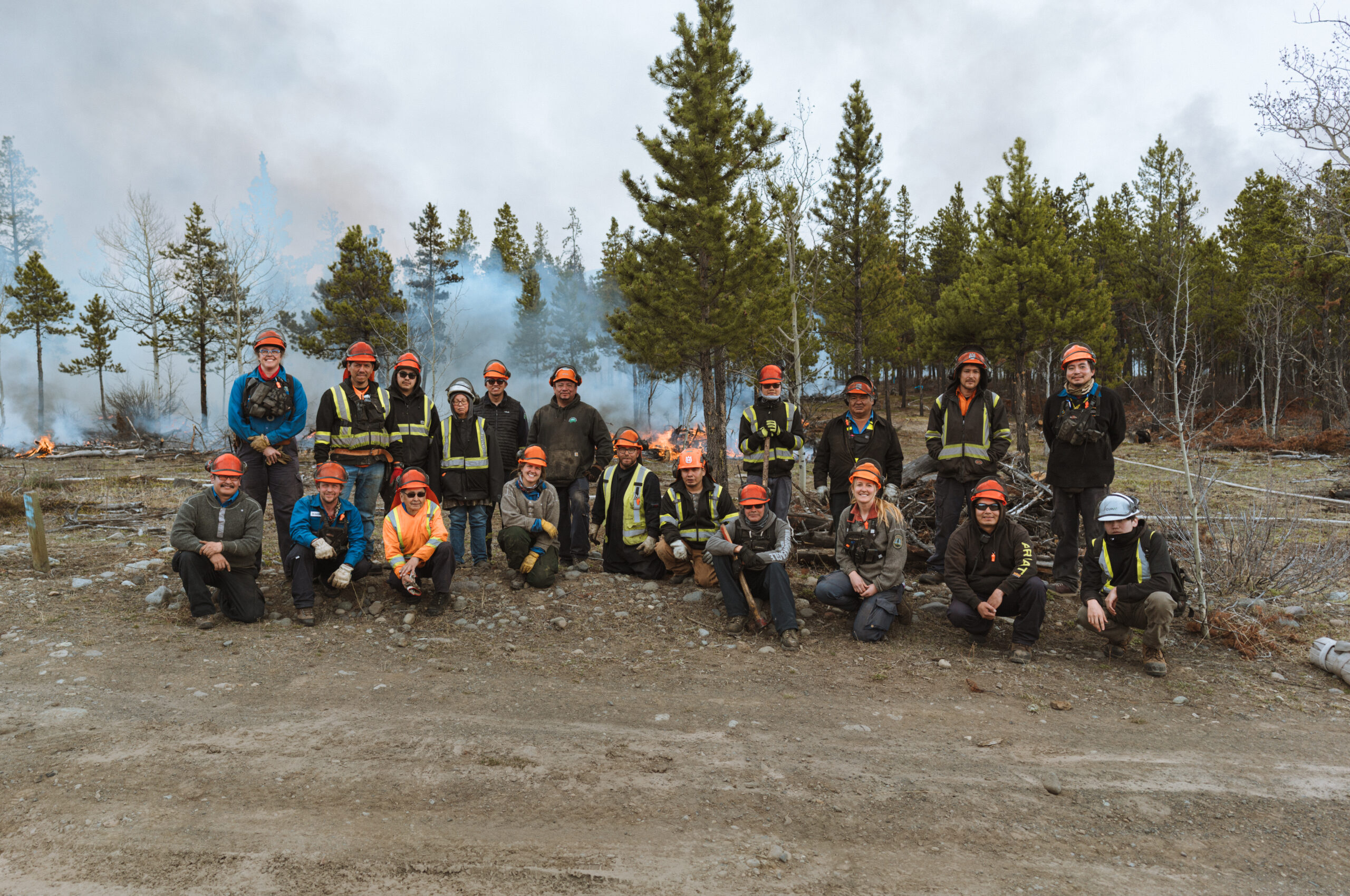
Photo: The Burn Team. Credit: Nolan Guichon,
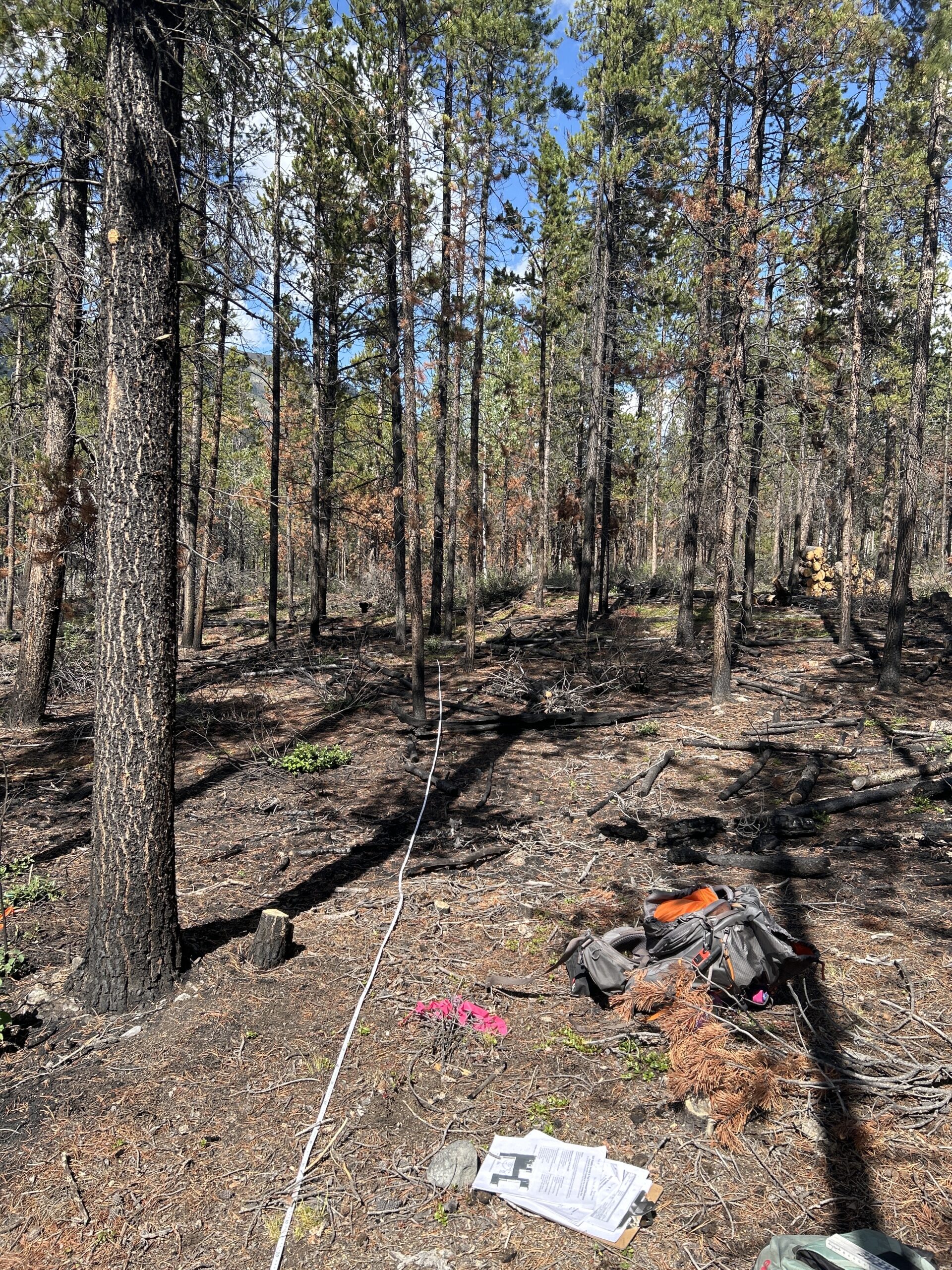
Photo: Post burn fuel sampling (UBC Method). Credit: Alexis Stowards.
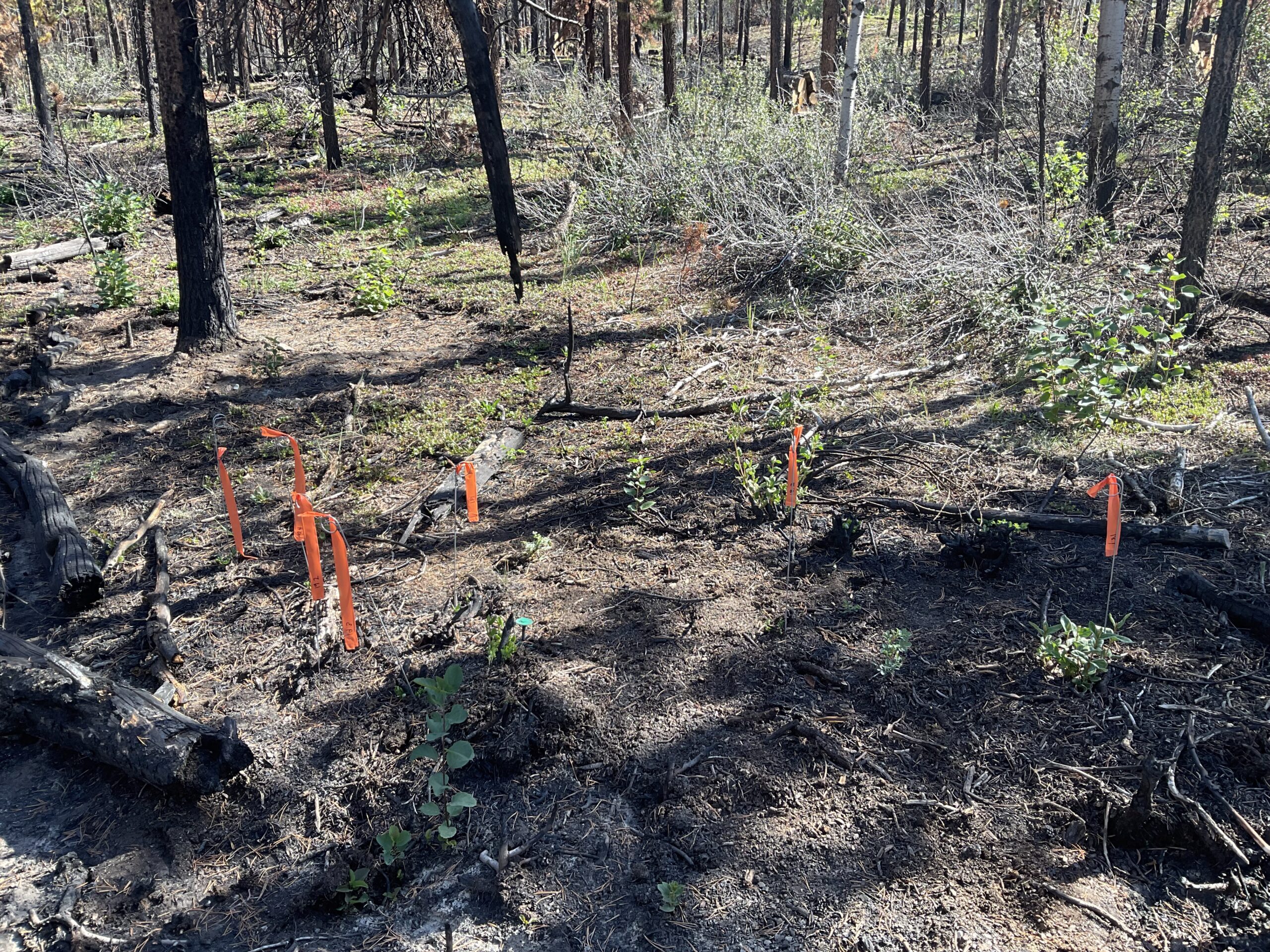
Photo: Post burn traditional plant survey. Credit: Alexis Stowards.
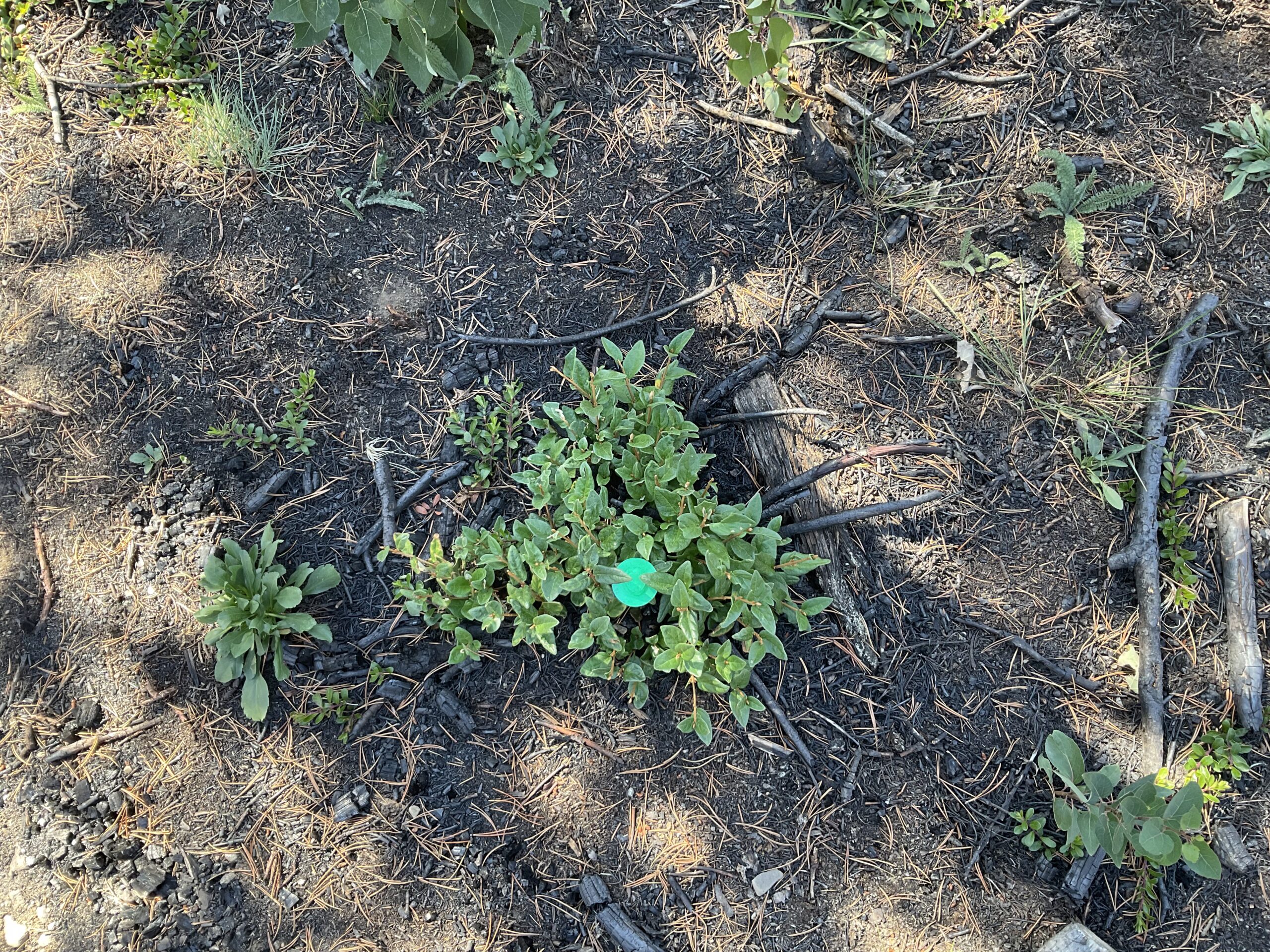
Photo: Post burn plant survey (Sheperdia canadensis). Credit: Alexis Stowards.