

Climate Resilience Silvicultural Monitoring Project
Project Title: Climate Resilience Silvicultural Monitoring Project
Recipient: McLeod Lake Mackenzie Community Forest
Region: Northeast
Awarded Amount: $7,500
Project period: 2024-2026
Description: After hosting the 2024 BC Community Forests Association (BCCFA) AGM and showing hundreds of forest practitioners innovative silviculture treatments along Highway 39, the McLeod Lake Mackenzie Community Forest (MLMCF) desires to embark on a long-term monitoring program. A key part of this monitoring program will be capacity building and communication of findings from this program. MLMCF plans to work with the BCCFA as a collaborator and to provide findings to BCCFA members and other forest practitioners. MLMCF sees this is an opportunity to showcase active silvicultural activities and to provide a learning exchange to other silviculture innovators, and that this opportunity is particularly needed in Northern BC.
Halfway Report:
The following is based on halfway reporting by the grantee.
April 15, 2026
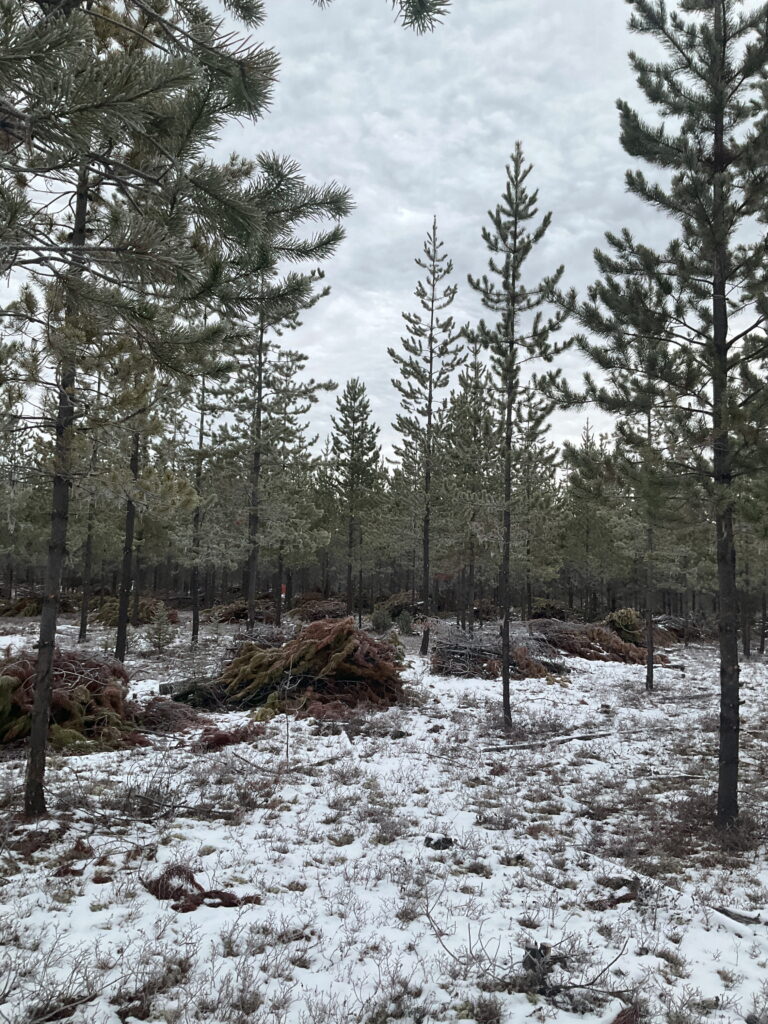
Since 2019, the MLMCF has been involved in innovative silviculture practices around wildfire risk reduction. This has resulted in hundreds of wildfire fuel treated areas, mostly along Highway 39 which is a one-way way in and out highway into the town of Mackenzie, BC. In the earlier days of wildfire risk reduction silvicultural practices, MLMCF’s foresters primarily focused on silvicultural practices that reduced fuels. Fuel categories targeted for reduction included crown fuels, ladder fuels, and surface fuels. There was a particular focus on high priority units identified as exhibiting the most probable high intensity wildfire behaviour.
In 2022, MLMCF foresters and Frontera staff began to observe a mix of ‘favourable’ and otherwise ‘unfavourable’ results. ‘Favourable’ results are defined as exhibiting the following characteristics: retained trees being healthy and vigorous, trees were windfirm, and regeneration of herbaceous, shrub, and tree layers appeared to be at healthy levels. ‘Unfavourable’ results were defined as: retained trees were dying or declining in health/vigor, trees were not windfirm, and tree or other plant regeneration was on the poor side. Given a mix of ‘favourable’ and ‘unfavourable’ results, the MLMCF embarked on a monitoring program to measure, monitor, and thus better understand why these effects were occurring. The MLMCF saw this as a good opportunity to improve silvicultural practices through adaptive management. To that end, the MLMCF applied for the SIP Capacity Building grant and was awarded this grant. The goals of this monitoring are to compile, interpret, and communicate these monitoring findings to the local community as well as the broader silvicultural community.
The project is slightly past its halfway point. To get to this point, we have completed the first year of plot installation, completed two rounds of data collection, and have begun the process of data compilation and interpretation. Next steps are to complete one more round of field data collection (Year 2, 2026) and to finalize the field data inventory dataset. Once this step is completed, the team will develop a basic report along with educational materials such graphics and a report poster. We believe having additional graphics or poster-like materials will communicate the findings from this monitoring work in a more effective manner.
Along with field work and reporting, we will attend the 2026 BCCFA conference to present on this project. Nick Soverel of Frontera plans to attend the conference and to share learnings from this monitoring project. The Frontera team will also communicate with BCCFA staff to see if report materials can be incorporated into BCCFA annual/semi-annual reports or other similar publications, including the BCCFA website and newsletter.
One lesson learned through this work has been the value of monitoring. Through monitoring and through observing and understanding the effects of fuel treatments on forests, we can now write better silvicultural prescriptions. In addition, this work has reminded the team that monitoring is a long-term process and that a 1-to-2-year monitoring plan is insufficient to study a site. This is because the processes affecting forest regeneration, windthrow, and forest health are longer than 2 years. To account for this reality and to increase collaboration, the Frontera team is working with UNBC and the Centre for Wildfire Coexistence to collaborate with a goal of continuing this monitoring work beyond 2 years.
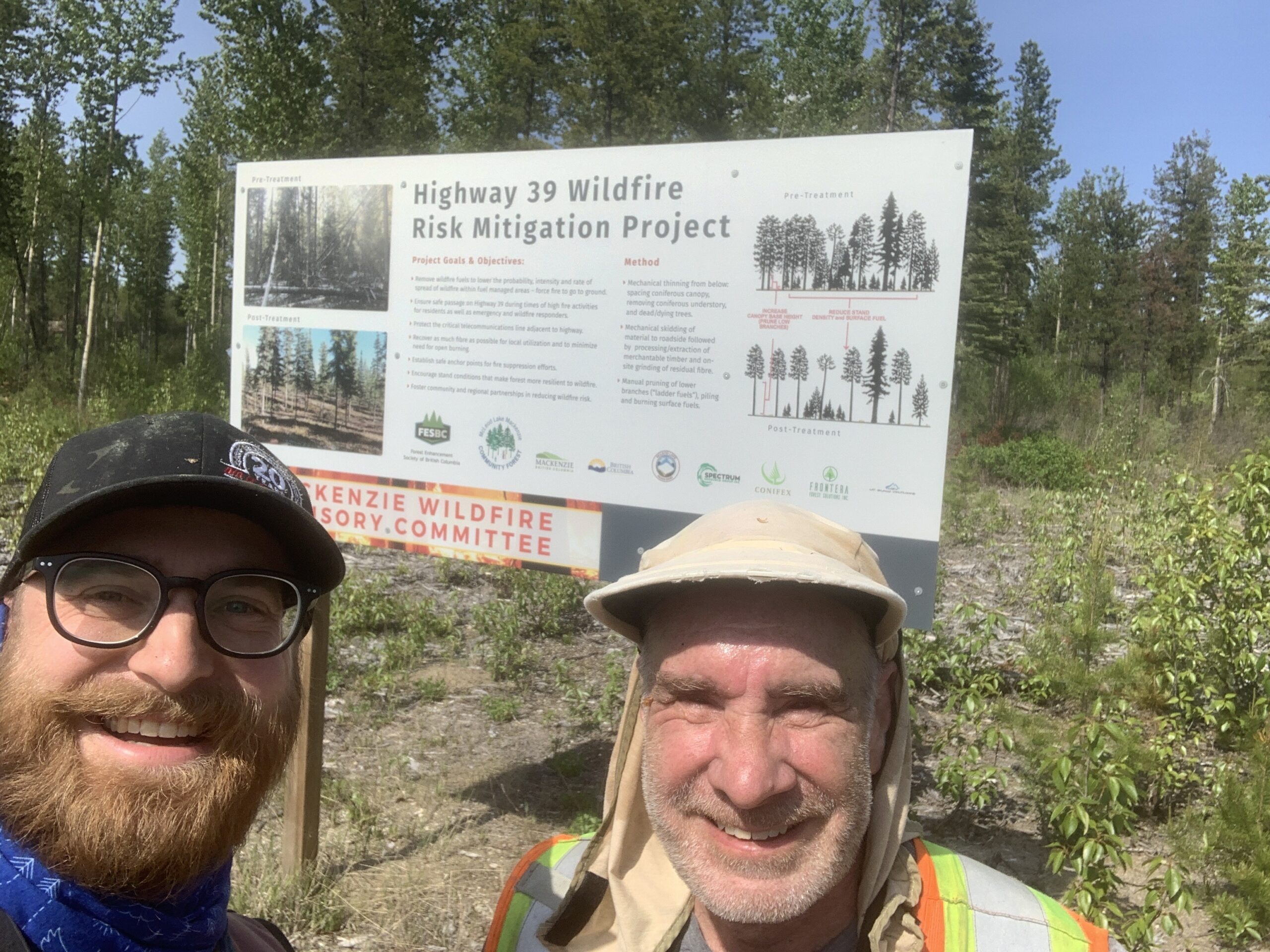
Photo: Charles Friesen and Quirin Hohendorf, consultants from Frontera Forest Solutions, taking a selfie in front of the Highway 39 Wildfire Risk mitigation Project sign. Credit: Quirin Hohendorf.
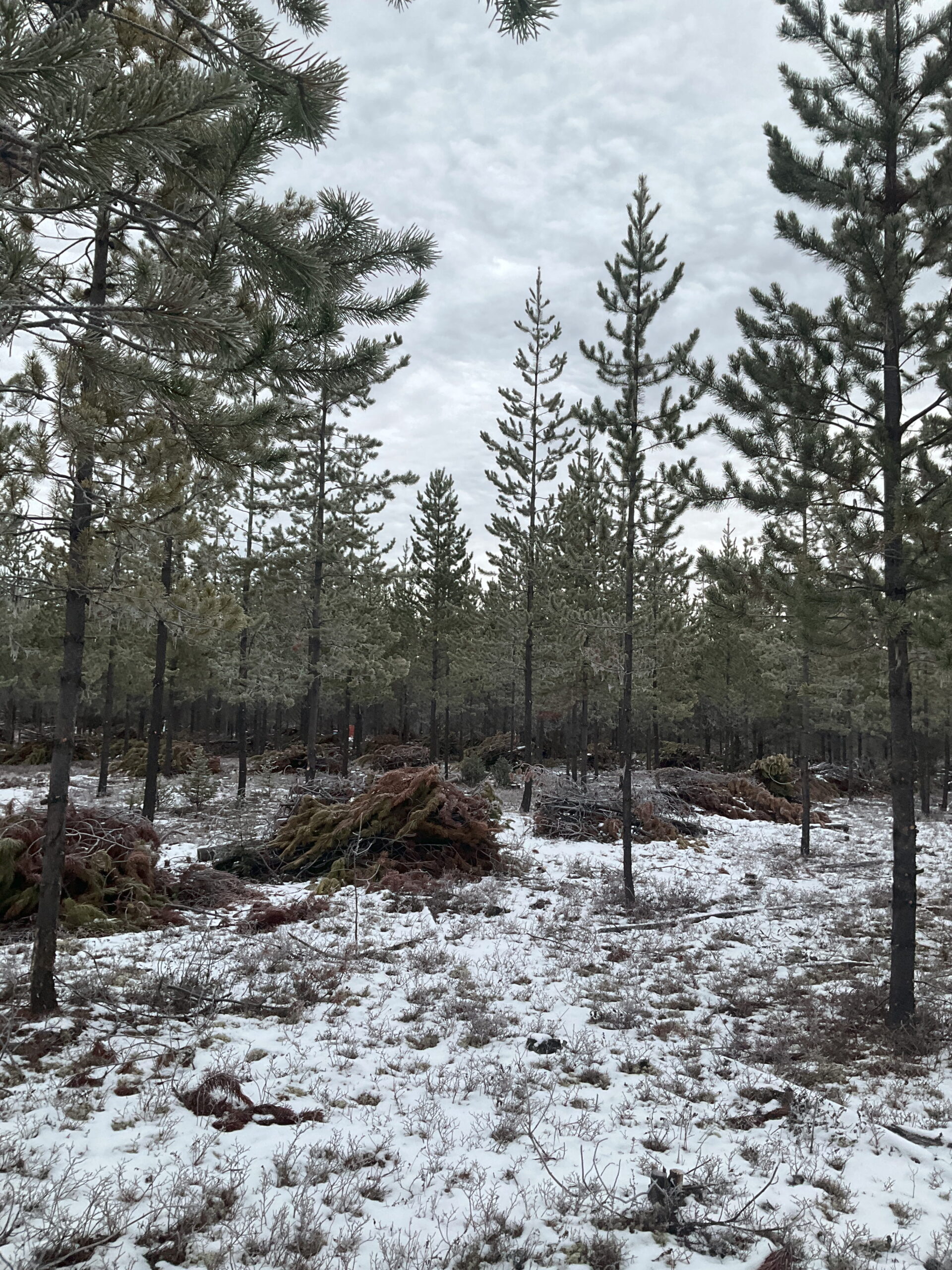
Photo: A photo showing some wildfire mitigation treatment work in progress in a young pine stand in the MLMCF. Credit: Nicholas Soverel.